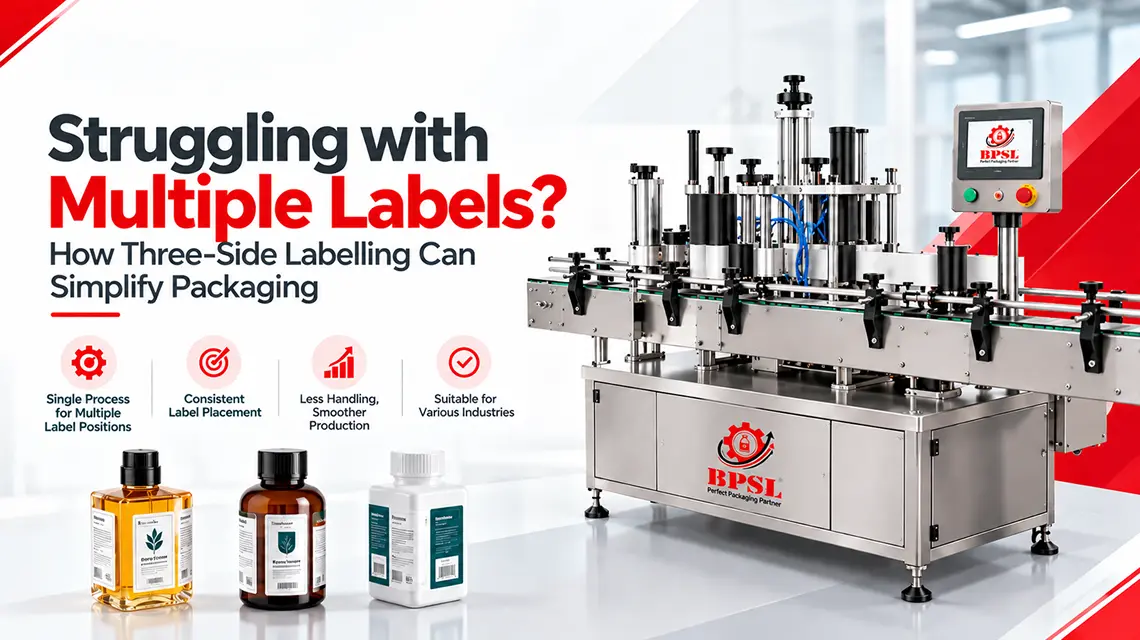
Packaging becomes more complicated when a product needs labels on multiple surfaces. Applying each label separately can add extra handling, increase the time required for packaging, and make it harder to maintain consistent placement. For businesses handling large production volumes, these small challenges can quickly affect the overall efficiency of the packaging line.
Three-side labelling offers a more organised approach. Instead of treating every label application as a separate task, a suitable automated system can coordinate the application of labels on multiple sides of a product. Being a leading three side labelling machine manufacturer and supplier, Boss Packaging Solutions Limited provides packaging machinery designed to support accurate and efficient labelling requirements across different industries.
When Multiple Labels Become a Production Challenge
Many products require more than one label to communicate essential information. A package may need product details on the front, identification information on the side, and additional information on another surface.
When these labels are applied manually or through separate machines, the product may need to be repositioned several times. Every additional handling step can add to the production cycle.
There is also the question of consistency. Labels that are slightly tilted, positioned too high, or placed at different distances from the product edge can affect the overall appearance of the packaging.
A three-side labelling system can help bring multiple labelling operations into a more coordinated process.
One Process for Multiple Label Positions
The biggest advantage of three-side labelling is the ability to handle multiple label positions as part of an integrated operation.
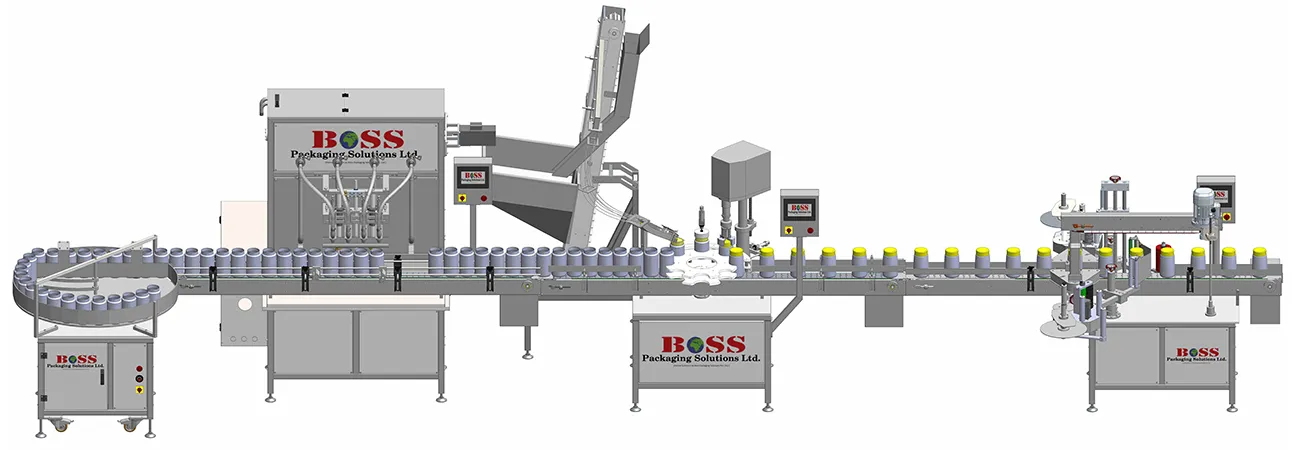
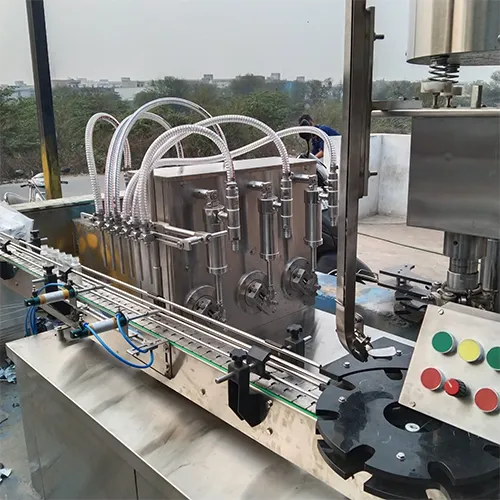
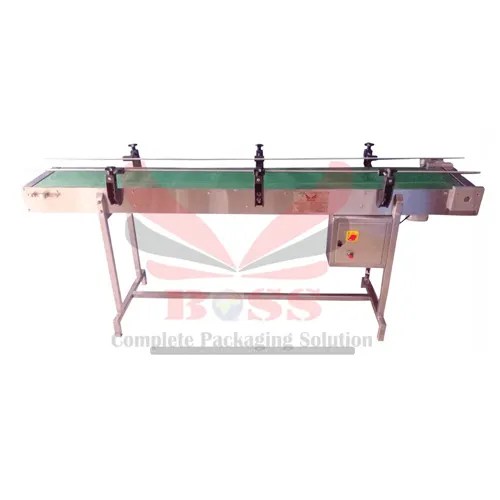
Instead of moving products between different labelling stations, the packaging line can be designed to guide the product through the required labelling process. Sensors, conveyors, label dispensing systems, and control mechanisms work together to maintain the required sequence.
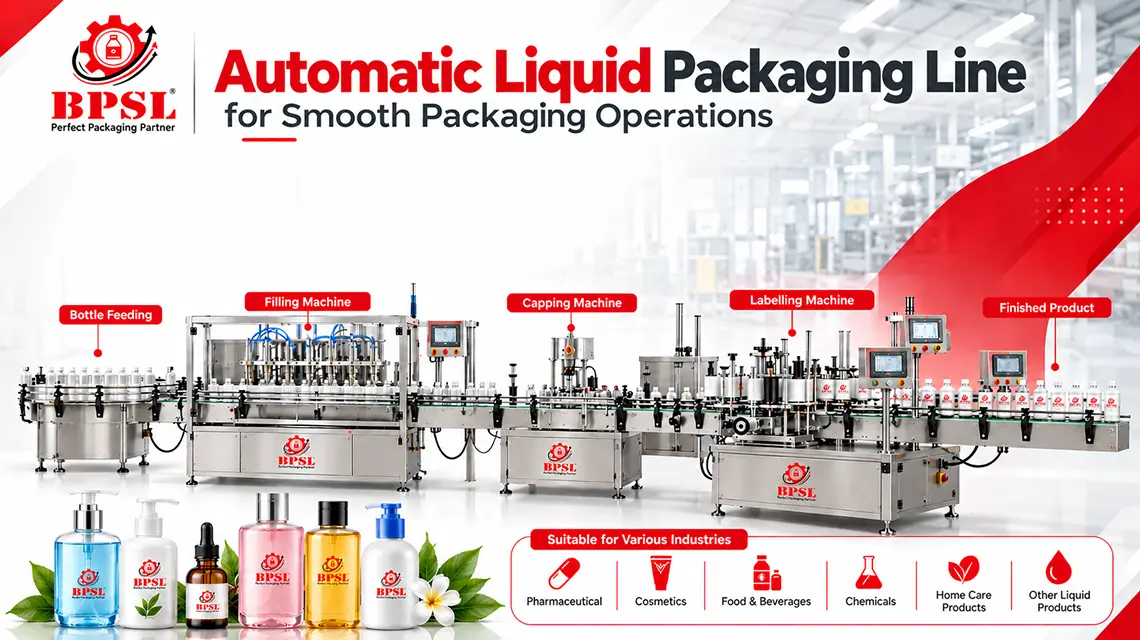
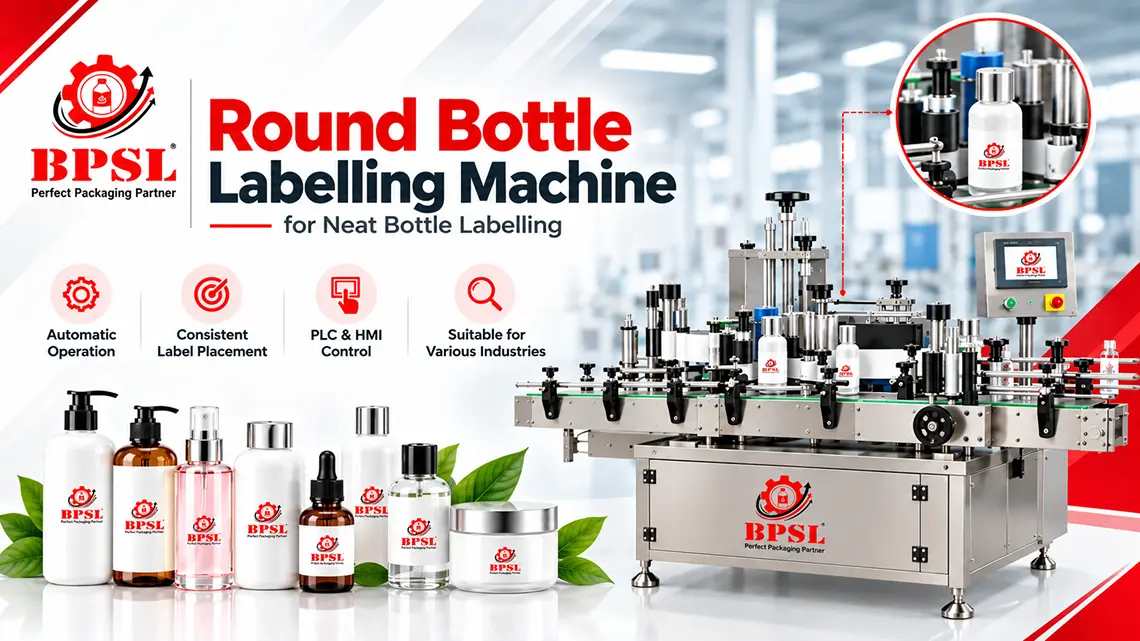
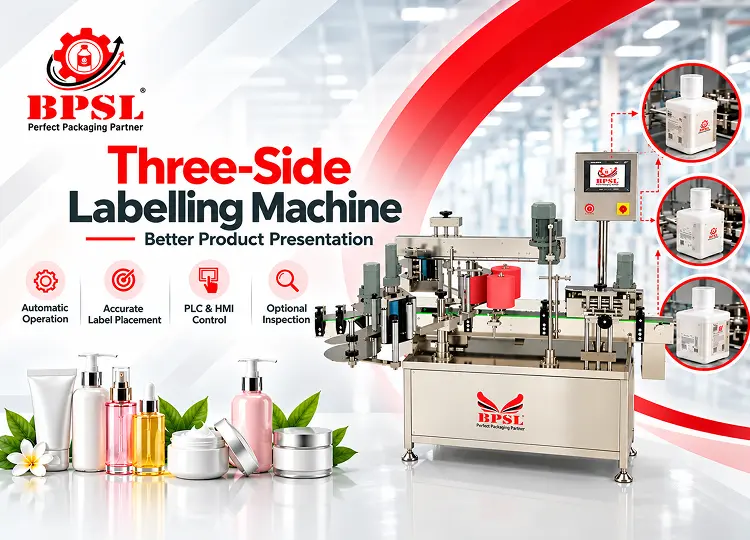
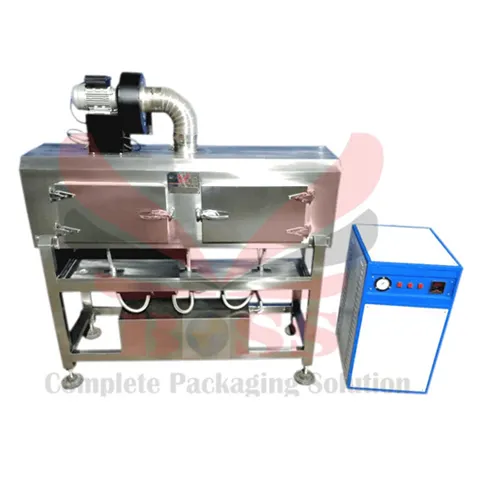
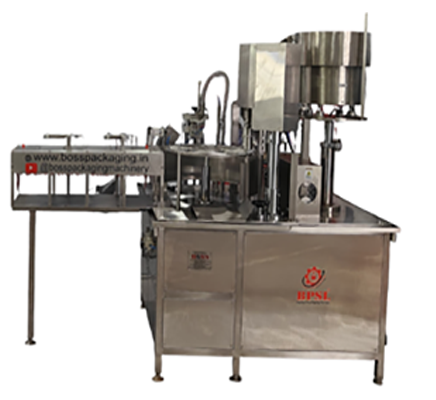
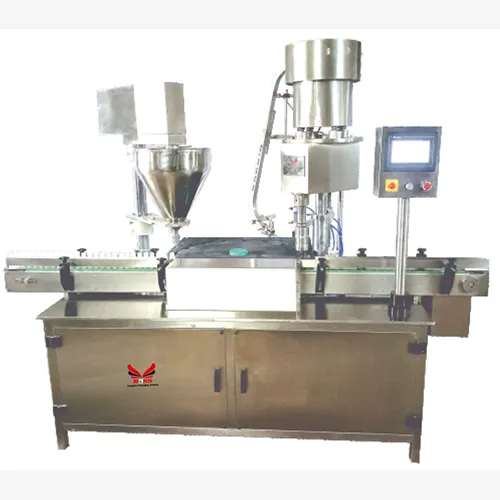
Boss Packaging Solutions offers automatic labelling technologies covering applications such as front and back labelling, top and side labelling, wrap-around labelling, and other configurations. Our product range also includes a three-side labelling machine designed for applications across FMCG, food and beverages, pharmaceuticals, chemicals, distilleries, pesticides, cosmetics, and home care.
Better Control Over Label Placement
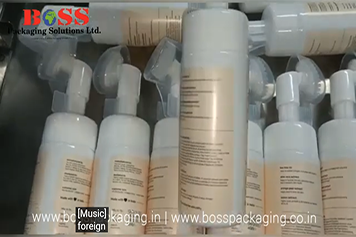
Label placement is not simply about sticking a label onto a container. Its position can influence how easily customers read product information and how professional the finished package looks.
Automated labelling equipment can help maintain more consistent positioning by using sensors and controlled dispensing mechanisms. Boss Packaging's labelling systems use PLC-based controls, product sensors, and label gap sensing technology in various machine configurations.
This type of control can be particularly useful when production involves thousands of products that need to follow the same packaging standard.
Less Handling, Smoother Production
Every time an operator has to pick up, reposition, or transfer a product, there is another opportunity for production delays or inconsistent handling.
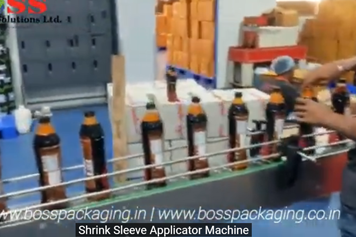
Automating multiple labelling steps can reduce unnecessary product movement. As the product reaches the labeling area, it is possible for the conveyor along with other machines to move the product through the necessary processes.
This helps in making the process more manageable, especially when businesses have to ensure constant packaging processes.
The benefit is not limited to speed. A more organised process can also make it easier for operators to monitor production and identify issues when they occur.
Where Three-Side Labelling Can Be Useful
Three-side labelling can be relevant to several industries where products require information across different surfaces.
Food and beverage packaging may require product identification, branding, and regulatory information. Pharmaceutical packaging can involve detailed product and batch information. Similarly, cosmetics, chemicals, home-care products, pesticides, and FMCG products can have different labelling requirements.
The exact machine configuration, however, should be selected according to the product shape, label dimensions, number of labels, production speed, and packaging-line layout.
Production Speed Without Losing Consistency
When production volumes increase, manually applying several labels to every product can become difficult to sustain. Adding more labour may increase capacity, but it does not necessarily solve consistency challenges.
Automation allows repetitive labelling operations to be performed through a controlled process. Depending on the machine configuration, production speeds can be designed around the requirements of the packaging line.
The appropriate speed should always be determined according to the product, label type, machine configuration, and complete production line.
Choosing the Right Three-Side Labelling Machine
Choosing a machine is not only about analyzing its maximum output. The manufacturer should also consider many other factors, such as the design of the container, number of labels, material of the label, available floor space, conveyor placement, etc.
Control features are also important. PLC and HMI-based systems can provide operators with greater control over machine operation and settings. Optional technologies such as vision inspection, rejection systems, OCR, OCV, and print-and-apply capabilities may also be considered when the application requires additional inspection or identification.
How Three-Side Labelling Simplifies Packaging
Being a leading three side labeling machine manufacturer and supplier, Boss Packaging Solutions Limited provides labelling and packaging machinery designed to help businesses manage repetitive packaging operations more efficiently.
The key benefit of using a three-sided labelling system is that the multiple stages of applying labels can be integrated into a single process rather than being a number of individual processes.
For businesses dealing with high-volume production or products requiring labels on different surfaces, three-side labelling can provide a practical way to simplify packaging without compromising the importance of accurate label placement. As a trusted packaging machine manufacturer, Boss Packaging Solutions Limited is committed to delivering reliable labelling solutions for a wide range of industries.
Frequently Asked Questions (FAQs)
Three-side and related multi-surface labelling systems can be used in industries such as FMCG, food and beverages, pharmaceuticals, chemicals, cosmetics, pesticides, distilleries, and home care.
It can combine multiple labelling operations into a coordinated machine process, reducing the need for operators to manually reposition and label every product.
Product dimensions, container shape, label size, number of labels, label position, required output, conveyor arrangement, available space, and integration with the existing packaging line should all be considered.